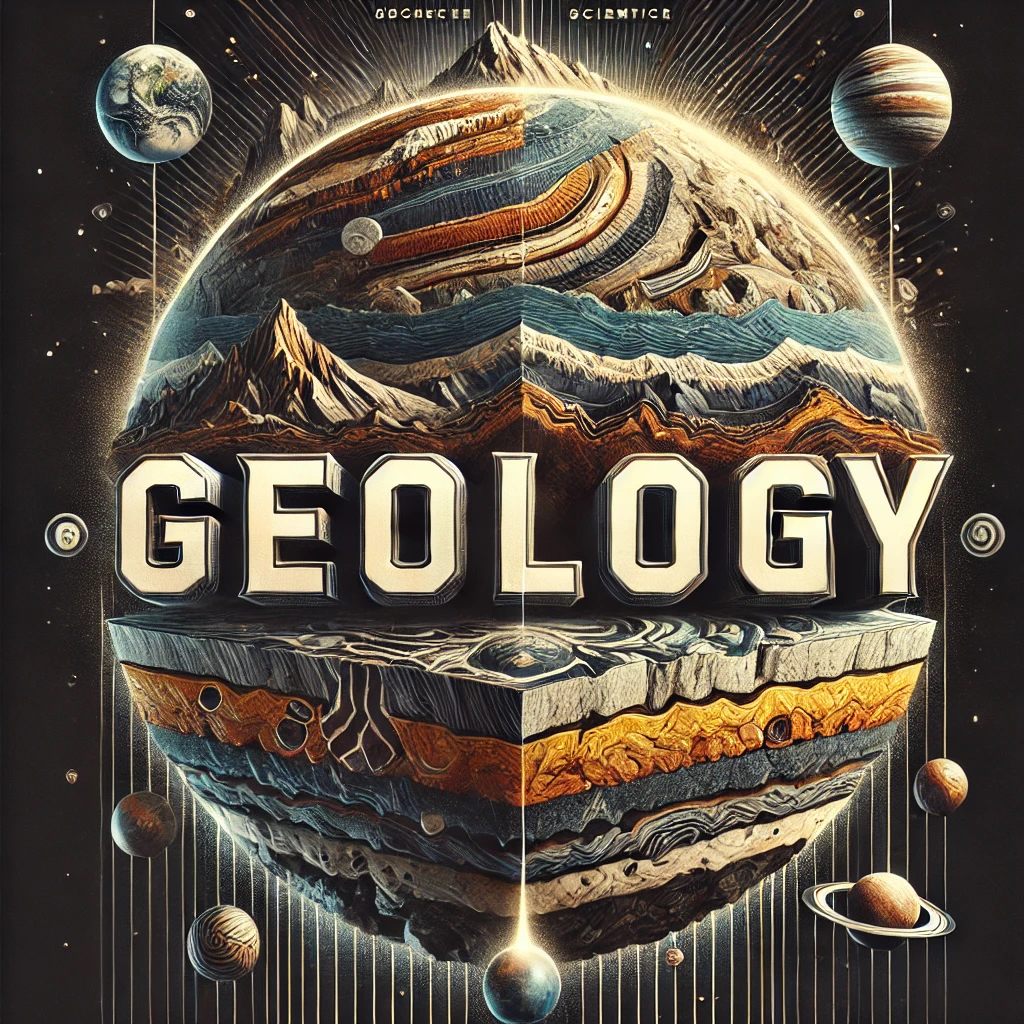
Introduction: Geology as the Foundation of Understanding
Geology, the study of Earth’s physical structure, materials, and processes, tells the story of our planet over billions of years. For the modern reader, it provides a lens to understand the forces that shaped our world—mountains that rise, valleys that fall, and rocks that hold the history of ancient events. Beyond its scientific depth, geology also reflects the handiwork of a Creator who designed the Earth with purpose and care.
1. Geology Simplified: Reading Earth’s Blueprint
At its essence, geology examines the solid Earth and the processes that form and transform it. Rocks, minerals, and fossils serve as Earth’s archives, recording its history in layers. The Grand Canyon’s strata reveal eons of sedimentation; volcanic rocks tell of fiery eruptions; and glaciers carve landscapes as they advance and retreat.
For the modern reader, these geological processes may seem distant, but they shape our everyday lives. The fertile soils beneath our feet, the energy resources that power our homes, and the stability of the ground we build upon all trace back to geology. Isaiah 45:18 reminds us of God’s intentionality: “For this is what the Lord says—He who created the heavens, He is God; He who fashioned and made the Earth, He founded it; He did not create it to be empty, but formed it to be inhabited.”
2. The Earth as Evidence of Order and Power
Geology showcases both the power and precision of creation. The movement of tectonic plates, the eruption of volcanoes, and the sculpting of landscapes by rivers and winds reveal dynamic processes that maintain Earth’s balance. Psalm 104:5 declares, “He set the Earth on its foundations; it can never be moved.”
Consider the delicate balance of Earth’s systems:
- The rock cycle transforms igneous, sedimentary, and metamorphic rocks, recycling Earth’s materials over millennia.
- The hydrological cycle ensures the distribution of water, vital for life, across land, sea, and sky.
- Mineral deposits formed over millions of years provide resources that sustain modern civilization.
These systems reflect not randomness but a Creator’s design, working in harmony to sustain life on Earth.
3. Geology’s Connection to Science, Art, and Education
Geology intersects with other disciplines, enriching our understanding of the world and inspiring awe for creation.
- Science: Geology informs environmental science, engineering, and climatology, contributing to sustainable practices. It helps us understand natural disasters like earthquakes and hurricanes, preparing us to live wisely in a dynamic world. Proverbs 3:19 affirms, “By wisdom, the Lord laid the Earth’s foundations, by understanding He set the heavens in place.” Through geology, we glimpse that wisdom.
- Art: The beauty of geological formations has inspired artists throughout history. From the jagged peaks of the Rockies to the sculpted arches of Utah, the land itself becomes a canvas. The swirling patterns in polished marble or the rich hues of gemstones highlight the Creator’s artistry embedded in Earth’s materials.
- Education: Geology teaches us to observe, hypothesize, and interpret. It fosters a mindset of patience, as the Earth’s processes often unfold over millions of years. Deuteronomy 32:4 calls God the “Rock” whose works are perfect—reminding us that understanding geology is also an exercise in understanding permanence and faithfulness.
4. Christian Libertarianism: Stability and Freedom in Earth’s Foundation
Geology offers a powerful metaphor for Christian Libertarianism. Just as the Earth’s foundation provides stability while allowing dynamic change on its surface, Christian Libertarianism upholds God’s unchanging moral laws while granting individuals freedom to live and grow within those boundaries.
Matthew 7:24-25 illustrates this concept: “Therefore everyone who hears these words of mine and puts them into practice is like a wise man who built his house on the rock. The rain came down, the streams rose, and the winds blew and beat against that house; yet it did not fall, because it had its foundation on the rock.” Just as a solid foundation is essential for stability, so too is God’s law foundational to true freedom.
Conclusion: Geology as a Reflection of Divine Design
Geology is more than the study of rocks—it is the study of Earth’s story, a testament to God’s creativity, power, and provision. It connects science, art, and education, reminding us of the intricate balance that sustains life. Each layer of Earth’s crust and each mountain peak speaks of the Creator’s purpose.
As we reflect on the Earth beneath our feet, let us remember Psalm 95:4-5: “In His hand are the depths of the Earth, and the mountain peaks belong to Him. The sea is His, for He made it, and His hands formed the dry land.” Geology invites us to explore and steward this gift, marveling at the Rock of our salvation who holds it all together.
 FergusonPoetryProject LLC
Leave a comment