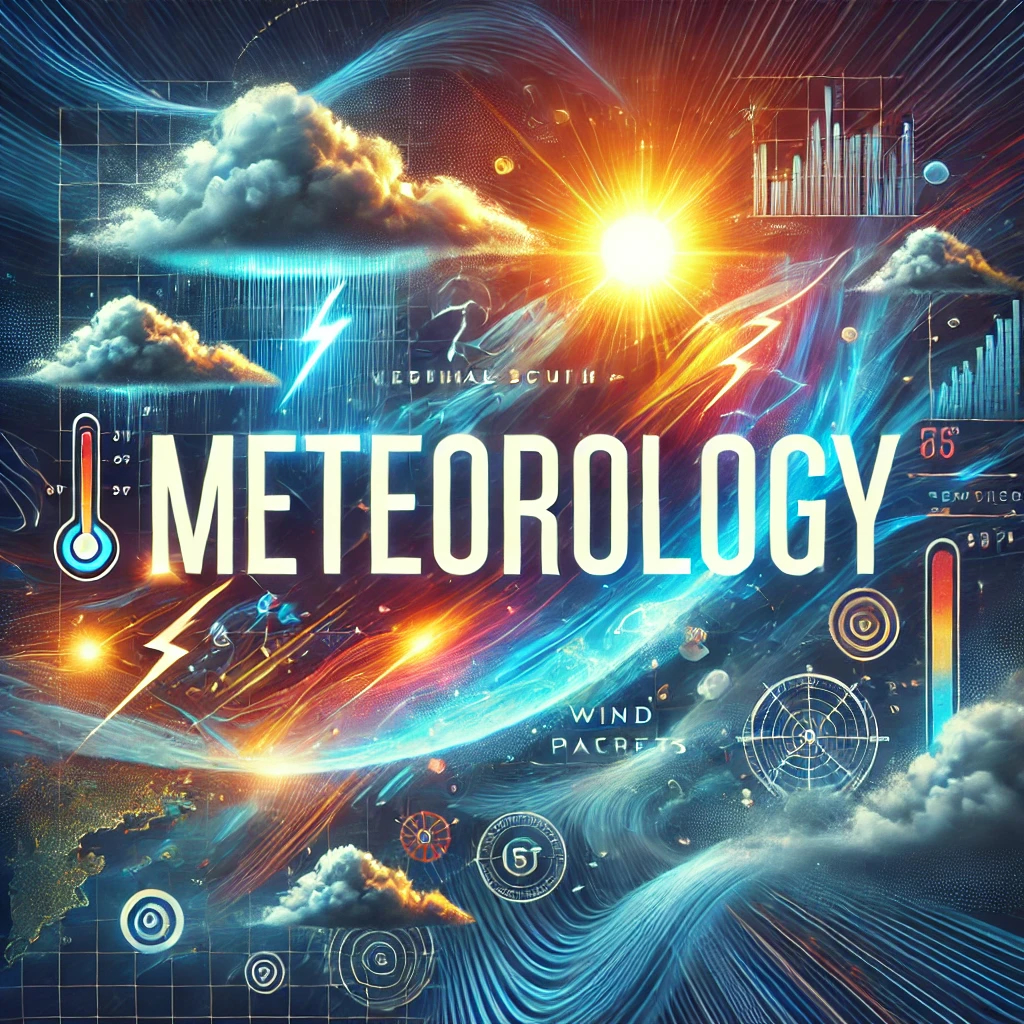
Introduction: Meteorology as the Study of Life’s Sustaining Forces
Meteorology, the study of the atmosphere and its phenomena, reveals the complex systems that govern weather and climate. For the modern reader, it provides insight into the processes that shape daily life—rainfall that nourishes crops, winds that shape landscapes, and storms that remind us of nature’s power. Beyond science, meteorology invites us to see the atmospheric systems as part of God’s intricate design, sustaining life and reflecting His sovereignty.
1. Meteorology Simplified: The Dance of Air, Water, and Energy
At its core, meteorology studies the movement of air, the behavior of water vapor, and the energy exchanges that produce weather patterns. From the swirling clouds of a thunderstorm to the gentle fall of snow, meteorology explains the atmospheric dynamics behind these events.
For the modern reader, these concepts manifest in tangible experiences: the chill of a winter breeze, the warmth of a sunny day, or the awe of a rainbow after a storm. The Bible reflects this wonder in Job 37:5-6: “God’s voice thunders in marvelous ways; He does great things beyond our understanding. He says to the snow, ‘Fall on the Earth,’ and to the rain shower, ‘Be a mighty downpour.’” Meteorology helps us understand the systems behind these divine commands.
2. The Atmosphere: Evidence of Precision and Balance
The Earth’s atmosphere is a masterpiece of balance and design. The precise composition of gases—78% nitrogen, 21% oxygen, and trace amounts of other gases—sustains life. The ozone layer shields us from harmful radiation, while the greenhouse effect maintains a habitable climate.
Consider the water cycle: evaporation, condensation, and precipitation. This continuous process ensures that water is distributed across the Earth, sustaining ecosystems and replenishing resources. Ecclesiastes 1:7 marvels at this cycle: “All streams flow into the sea, yet the sea is never full. To the place the streams come from, there they return again.”
Storms, though often destructive, also serve essential roles in maintaining Earth’s balance. Hurricanes redistribute heat from the tropics, and lightning helps fix nitrogen into the soil, enriching it for plant growth. These phenomena reflect a Creator who sustains the Earth through both calm and chaos.
3. Meteorology’s Connection to Science, Art, and Education
Meteorology, like other sciences, intersects with art and education, offering profound opportunities for exploration and inspiration.
- Science: Meteorology is critical for understanding and mitigating the impacts of climate change, predicting severe weather, and managing natural resources. It serves as a reminder of humanity’s responsibility to steward creation wisely. Genesis 2:15 calls humanity to “work [the garden] and take care of it,” a mandate that extends to protecting the atmosphere.
- Art: The skies have inspired artists and poets throughout history. From vivid sunsets to stormy skies, meteorological phenomena are depicted in paintings, literature, and music, capturing the emotional resonance of the atmosphere’s beauty and power.
- Education: Meteorology teaches observation, analysis, and prediction—skills that apply far beyond weather forecasting. It fosters curiosity about the natural world, encouraging students to see the interconnectedness of systems. Proverbs 2:6 reminds us, “For the Lord gives wisdom; from His mouth come knowledge and understanding.” Understanding the atmosphere is part of pursuing this wisdom.
4. Christian Libertarianism: Freedom in the Winds of Change
Meteorology offers a profound metaphor for Christian Libertarianism. The atmosphere, though governed by laws of physics, is dynamic and ever-changing. Wind flows freely, but within the constraints of pressure systems, temperature gradients, and the Coriolis effect.
Similarly, Christian Libertarianism champions individual freedom within the framework of God’s unchanging moral laws. Galatians 5:13 reminds us, “You, my brothers and sisters, were called to be free. But do not use your freedom to indulge the flesh; rather, serve one another humbly in love.” Just as atmospheric systems maintain balance and life, so does liberty flourish when anchored in divine principles.
Conclusion: Meteorology as a Reflection of God’s Care
Meteorology reveals a world in motion, sustained by the Creator’s wisdom and power. From gentle rains to powerful storms, the atmosphere reflects the majesty and intricacy of God’s design. It connects science, art, and education, inspiring us to marvel at creation and take responsibility for its care.
As we observe the skies, let us echo the words of Psalm 147:8: “He covers the sky with clouds; He supplies the Earth with rain and makes grass grow on the hills.” Meteorology invites us to see the atmosphere not just as a system, but as evidence of a Creator who sustains all things, ensuring that life on Earth flourishes under His watchful care.
 FergusonPoetryProject LLC
Leave a comment